Read more about ..
Posted by  Jiayi chen (jiayi) on
Jiayi chen (jiayi) on 
 Jiayi chen (jiayi) on
  Anthony Mata (he/him) on
 Rethinking humanity is a tough task, but if anybody can do it’s the great Donna Haraway. Haraway’s thought and logic is that of assemblages. If it is our connection with technology or the earth, she wants us to open new avenues of reframing our own subjectivity. Our way of understanding and shaping this world is one in which everything else is dead and we are the things that imbue things with life. Marx precisely means this when he speaks of our “species being”, that innate human beings are our creative creatures. We appropriate nature to transform it into something useful or ‘alive’ in some sense. Yet the world is not dead, as Haraway points out. All of nature’s interfaces exist within us and us within it. As she says:
“Vast investments and hugely creative and destructive technology can drive back the reckoning, but cheap nature really is over.”
We are simply using nature or us at it’s whims, but ultimately we have a symbiotic relationship with it. When she talks about ‘cheap nature’ she is critiquing this idea nature is an unlimited source of power that is ripe for the taking. The dichotomy between active participants (temporal dependent subjects) and an atemporal world is an almost self fulfilling prophecy. The more we frame the world as an object to be appropriated ,maimed, and disfigured, the more we are likely to reduce ourselves to simple objectification. Take the imagery of dead planets in sci-fi for instance, like in the first Alien film when they first land on LV-223. The remnants of what seemed like a vast active community seems like ruins, and the explicit mission of the corporation that sent a team to investigate it is to see what they can extract from it. Yet the planet is very much not dead, in fact the structures of the planet, the architecture of the buildings are almost skeletal. This curiosity, and suspicion that what is ‘dead’, what is ripe for the taking for human exploitation, ultimately leads to the relaxation that the very planet they are standing on contains multitudes of creatures ready to gestate in any poor soul who stumbles upon them.
What a film like Alien shows us is similar to what Haraway coins the Chthulucene. Of it she says:
“.. but rather after the diverse earth-wide tentacular powers and …forces and collected things..with its problematic Greek-ish tendrils, entangles myriad temporalities and spatialities and myriad intra-active entities-in- assemblages—including the more-than-human, other-than-human, inhuman, and human-as- humus.”
Human beings are not ‘important’ and we certainly aren’t unified as a unit of stuff. We belong to everything, not in some Neo-Platonic sense, but that the boundary of our existence is constantly sprawling through time and space. The Chthulucene ask us to escape these boundaries of bodies and to start thinking not as subjects or even objects, but to think with everything. The future is not theirs [our descendants] and by pronatalist logic simply ours, but the future belongs to everything always.
 Diahanne (She/her) on
 Donna Haraway’s “Anthropocene, Capitalocene, Plantationocene, Chthulucene: Making Kin” critically reflects the different ways we understand the current geological and sociopolitical crises of our time. Haraway evaluates how we conceptualize how humans, non-humans, and the planet interact and offers different frameworks that challenge human-centric and explosive systems. We might rethink our relationships with the Earth and other species. These ideas connect with Rob Nixon’s concept of “slow violence,’ which refers to a type of invisible violence that environmental degradation and social exploitation enacts over time. Both thinkers emphasize the systematic harms that occur through environmental destruction and exploitation.
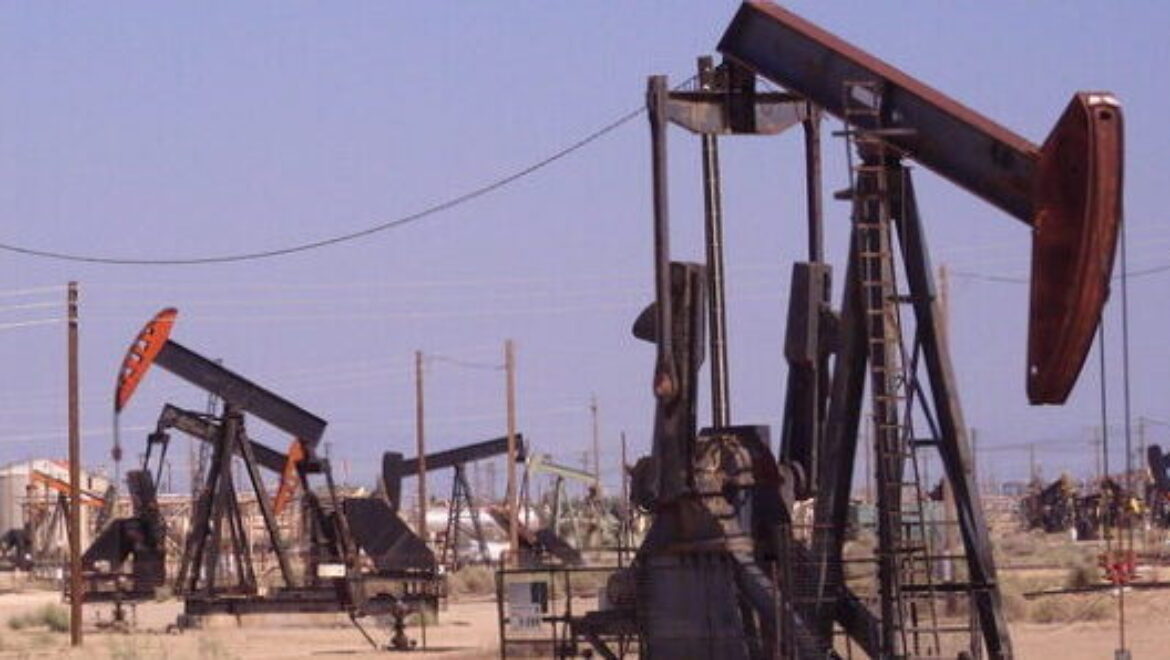
Haraway uses the terms “Anthropocene, Capitalocene, Plantationocene, Chthulucene: Making Kin” to explore various perspectives on how humans, non-humans, and the planet interact. Haraway’s concept of “Capitalocene” highlights capitalism as the driving force behind environmental degradation and exploiting natural resources and ecosystems for profit. This directly connects with Nixon’s concept of “slow violence.” In the Capitalocene, capitalism’s relentless focus on profit drives environmental degradation, from deforestation and fossil fuel extraction to ocean pollution. These processes of ecological exploitation do not cause immediate catastrophe but result in long-term environmental destruction that disproportionately affects marginalized communities and ecosystems—exactly the type of “slow violence” Nixon describes. For example, the pollution caused by oil extraction or the slow poisoning of communities living near industrial waste sites demonstrates how capitalist practices result in long-term environmental harm. While the violence is not explosive or spectacular, it accumulates over time, degrading ecosystems and human health. Haraway’s critique of the Capitalocene emphasizes that the logic of capitalism is responsible for this kind of exploitation, making the connection between capitalism and environmental harm a key form of “slow violence.” The suffering of marginalized groups mirrors Nixon’s point that “slow violence” is rarely recognized until the damage is far-reaching and nearly irreversible.
Haraway shines a light on a list of ongoing injustices, from the ongoing exploitation of land and people through slavery and colonialism to ecological destruction. Haraway states, “It’s more than climate change, its also extraordinary burdens of toxic chemistry, mining depletion of lakes and rivers under and above ground, ecosystem simplification, vast genocides of people and other critters, in systematically inked patterns that threat major system collapse and after major system collapse after major system collapse. Recursion can be a drag. (1)” Haraway calls humans out for getting stuck in these repetitive cycles where our actions lead to the same problems reappearing and having the same outcome all the time shows we make the issues are deemed to be ok and not in crisis mode, just like Nixon did in “Slow Violence” The media and politicians always using the term, “yes, but not now, not yet” deeming that because environmental action isn’t as critical yet means that it shouldn’t be urgent in society eyes This is another one of the reasons why Haraway consistently criticizes human behavior for the causes of climate change and environmental degradation.
Rob Nixon’s concept of “slow violence” and Donna Haraway’s ideas in “Anthropocene, Capitalocene, Plantationocene, Chthulucene: Making Kin” both address long-term environmental degradation and social exploitation, but they differ in focus, framing, and solutions. Haraway’s ideas connect deeply with Nixon’s. Both understand the urgency of the current situation, and yes it is difficult to represent effectively both approach the situation differently, but effectively.
 Gabrielle Delwyn (She/her/) on
 The novel “Parable of the Sower” by Octavia Butler is based on the idea that climate change and social inequality within societies will create an unstable environment for humans and the earth to survive in. This novel is set in a post – apocalyptic future where racism, classism and environmental issues exist and how all of these problems will eventually affect the American future. Octavia Butler makes the acceptance of change a huge factor in this novel because change is the holy grail of the better days to come. As LeVar Burton stated in the foreword of the novel, “she painstakingly built a body of work that is decidedly humanistic while remaining unashamedly, unapologetically Afrocentric” (Burton, Pg.viii). Butler is able to showcase real world problems involving the interest of human welfare, our values, and still being able to emphasis black struggle which makes a lot of situations in the novel relatable to the present day struggles. Through the main character Lauren Olamina, Butler argues that change is the inevitable and without it, nothing will start to prosper into the society that people so desperately want.
Based in California in the town of Robledo, Lauren and her family live in a gated community where they practice a baptist belief. This community is closed off from the rest of the world essentially because no one leaves and no one comes in unless both parties have a death wish. Within this community and outside of it there is a lot of challenges because society is corrupt. There is inflation in food, water shortage due to prices increasing, violence, extreme climate changes causing natural disasters and many people without a home. Prior to the year of 2020 none of these things were so prevalent like how they are now. Within chapters 1 through 7 Lauren’s family and neighbors are constantly looking for ways to defend themselves from the outside and trying to create a space that is doable to continue to have a life in. Lauren has some ideas and new beliefs of her own which she realizes as she starts to mature. The role that God plays in her family’s life is the typical belief that most people have which is that he is the creator. He is the all mighty and powerful being that will allow them to get out of the disaster they are in and put them on certain paths in their life for the greater good. They see him as the being that knows and loves you and the being that holds their faith in his hands. Since the age of 12 Lauren has started to realize some things for herself prompting her to write down verses about God that she deems to be true. In chapter 3 she says, “I believe in something that I think my dying, denying, backward looking people need” (Butler, pg. 25). Lauren believes in what she sees right in front of her and actively doing something now that could change things rather than just continuing to accept things for what it is. Later in chapter 7 she figures out what to call her new religion which is known as “Earthseed”. She explains that Earthseed is a “God is change” belief system where people essentially need to “seed themselves” far away from the place that is trying to swallow them whole (Butler, pg.77,78). She establishes this belief because she starts to obtain the knowledge that if there is not better choices made in terms of creating change and actively learning and working towards it they will always be where they are at now.
It is no secret that with the way society is right now and the vast changes happening in the climate, there will be no future for anyone to live through. Butler creates Lauren to be the person that starts to see reality for what it is. She makes her the character that refuses to accept the economic crisis that continues to rise and instead be the being that breaks the past beliefs which is doing nothing but keeping them from truly living a life that is at the end of their finger tips.
 Ruth Herrera (she/her) on
 Donna Haraway’s “Anthropocene, Capitalocene, Plantationocene, Chthulucene: Making Kin” challenges how we talk or think about problems in the everyday world. Haraway wants people to think outside of the everyday Anthropocene and suggests that we need to build connections with the inhuman that surrounds our everyday. Since the beginning of time, when regarding the ever-changing planet that is earth, humans saw themselves as the “main character,” for a more modernized term. Haraway challenges this way of thinking and suggests that we need to think about how systems like capitalism play an important role in the disconnection we have with the living organisms around us. Haraway refers to this as capitalocene.
The term plantationocene is used by Haraway to ask people to think about the historical impact of plantations and colonialism. Haraway says, “The spread of seed-dispersing plants millions of years before human agriculture was aplanet-changing development, and so were many other revolutionary evolutionary ecological developmental historical events.” Haraway reaffirms that before humans started agriculture on earth, there were plants that also affected and played apart in shaping the earth. She is asking us to consider these living organisms as well when thinking about the problems that happen in the world. These living organisms are as important as we are.
Haraway uses the term chthulucene as a better alternative for the Anthropocene. Where humans can make Kin with all the forms of life on earth to creative better relationships that can help the problems that are happening in the everyday world. Haraway says, “One way to live and die well as mortal critters in the Chthulucene is to join forces to reconstitute refugeesto make possible partial and robust biological-cultural-political-technological recuperation and recomposition, which mustinclude mourning irreversible
losses.” Haraway wants people to work together to restore spaces where different ecosystems can thrive. Doing this means that changes will need to be made where we will need to reconsider the health of organisms and make active connections that will lead us to understand what they need. It will also ask us to reconsider politics and the tools of innovation we use, and this will lead to us losing ecosystems and making grand changes to our everyday. In conclusion, Haraway is suggesting that to better understand the problems of everyday life, we need to make connections with all the living organisms around us as well as actively work on improving all aspects of everyday life.
I see a connection in Haraway’s ideas with Amitav Ghosh’s “The Great Derangement: Climate Change and the Unthinkable.” Ghosh critiques contemporary literature and culture for failing to properly address the climate crisis. He argues that modern storytelling doesn’t do a good job at capturing the severity of environmental issues, thus failing to inspire the collective action needed to address them. Ghosh asks for a new narrative that better reflects what’s actively happening with the environment and climate.
Both Haraway and Ghosh suggest for a shift in how we think about and respond to our ecological and social crises. Haraway’s asks for a Chthulucene, to rethink our relationships with other life forms and to make more inclusive and supportive connections. Similarly, Ghosh’s call for new literary narratives this resembles Haraway’s push for fresh ways of understanding and engaging with the world.
In conclusion Donna Haraway’s essay challenges the everyday Anthropocene by proposing different terms that reflect a more complex and interconnected understanding of our environmental and social issues. Her ideas make us rethink our place in the world and work towards a more personal and collaborative approach in regards to global issues, much like Ghosh’s call for a more effective and reflective literary response to climate change.

